



Type:
Curation
Bio Design
Installation
Artist:
Angelina Zhang, Benedetta Zuccarelli, Chenjie Xiong, Lydia Yan, Patrick Margain, Skye Gao, Ya Qin
Supported by
Harvard Office for Sustainability
Year:
2025
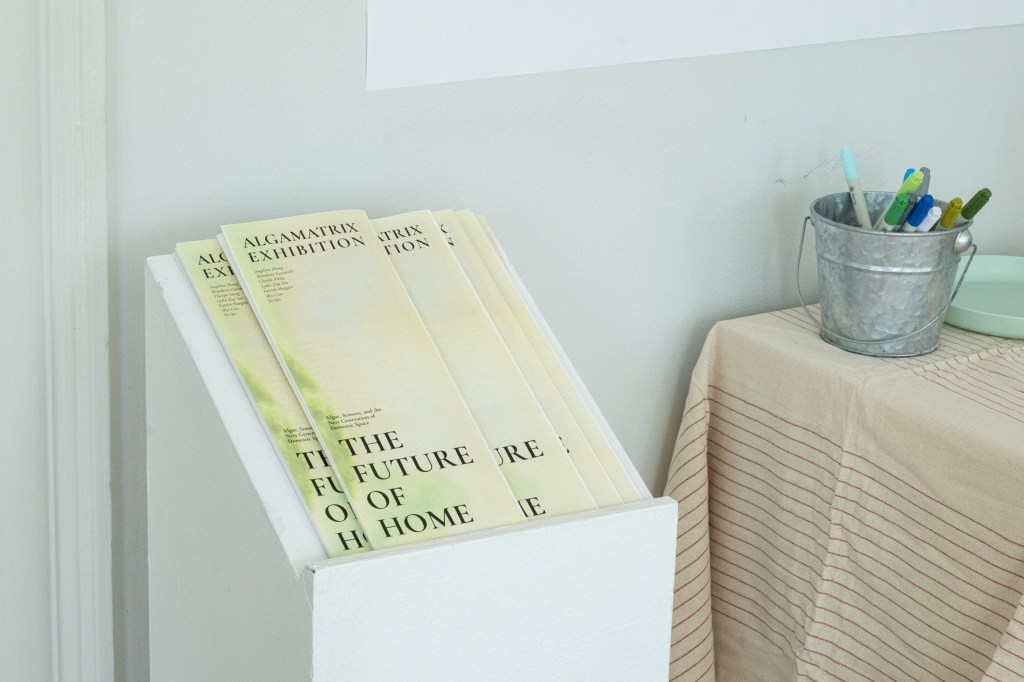
What if the spaces we inhabit could sense, adapt, and respond to the world around them?
As climate change accelerates and urban environments grow increasingly toxic, the role of domestic space must evolve. No longer simply shelters from the elements, our homes are becoming the front line in the pursuit of environmental resilience and human health. The next generation of living spaces must not only provide comfort but also monitor, react to, and even regenerate the conditions within and beyond their walls.
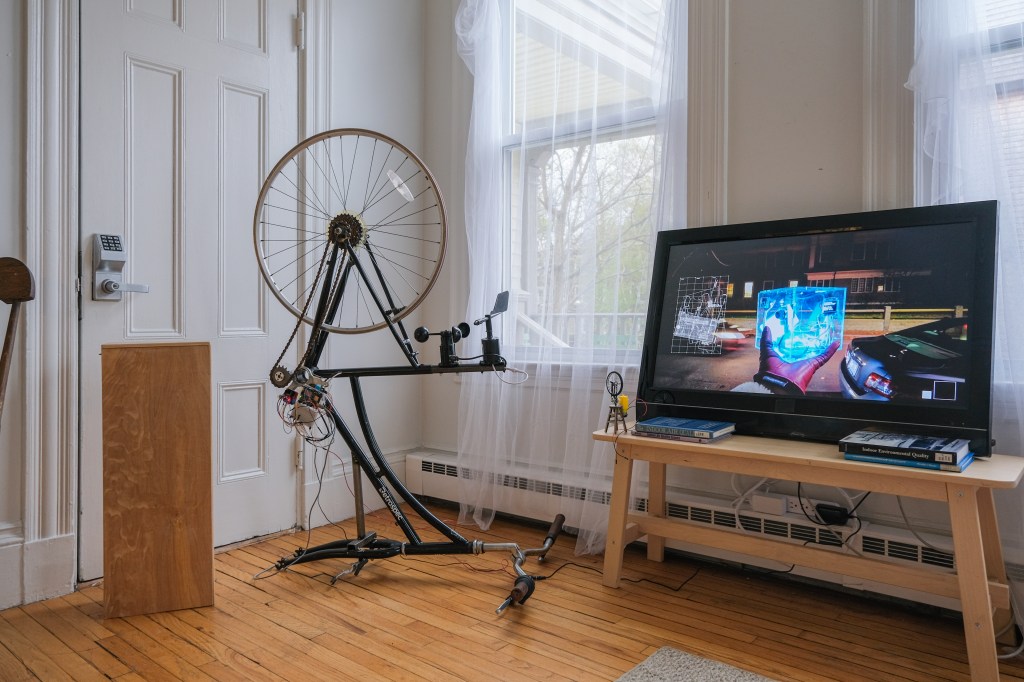
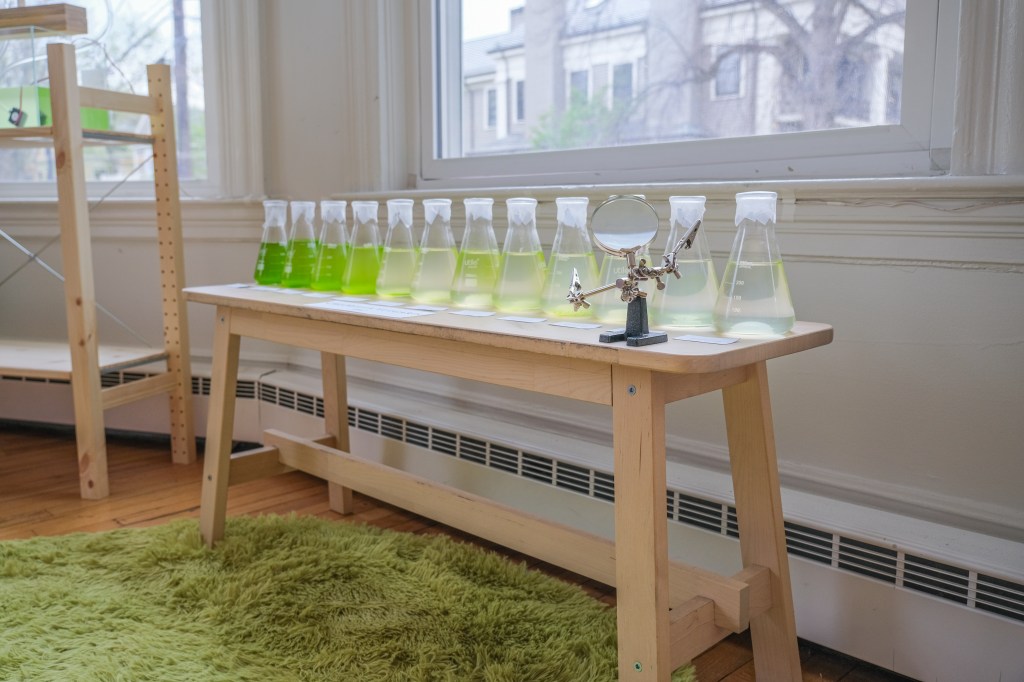
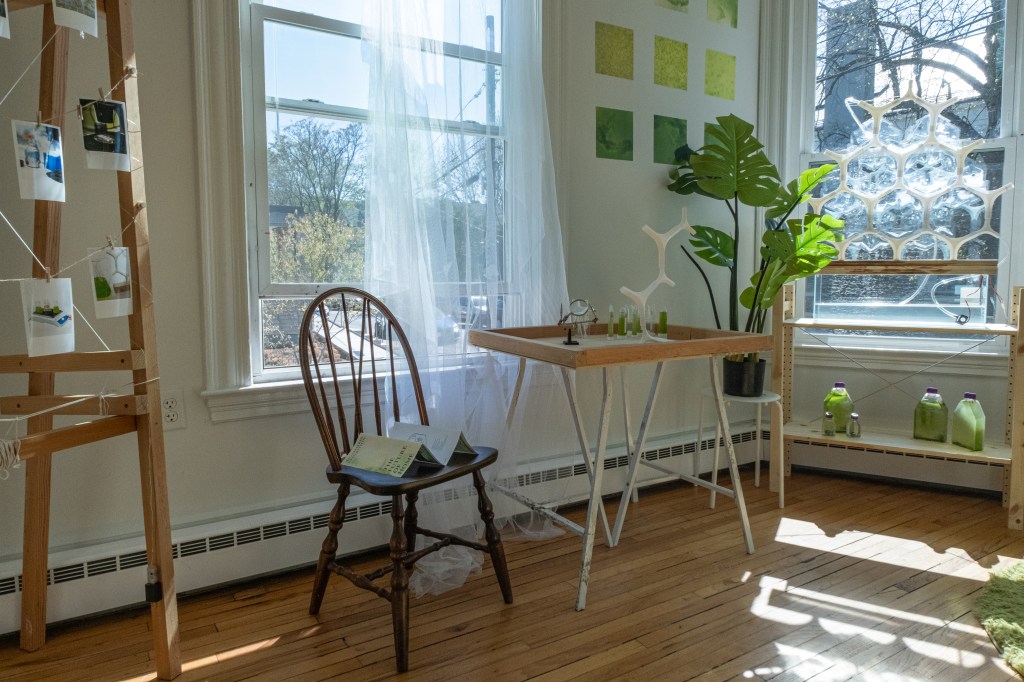
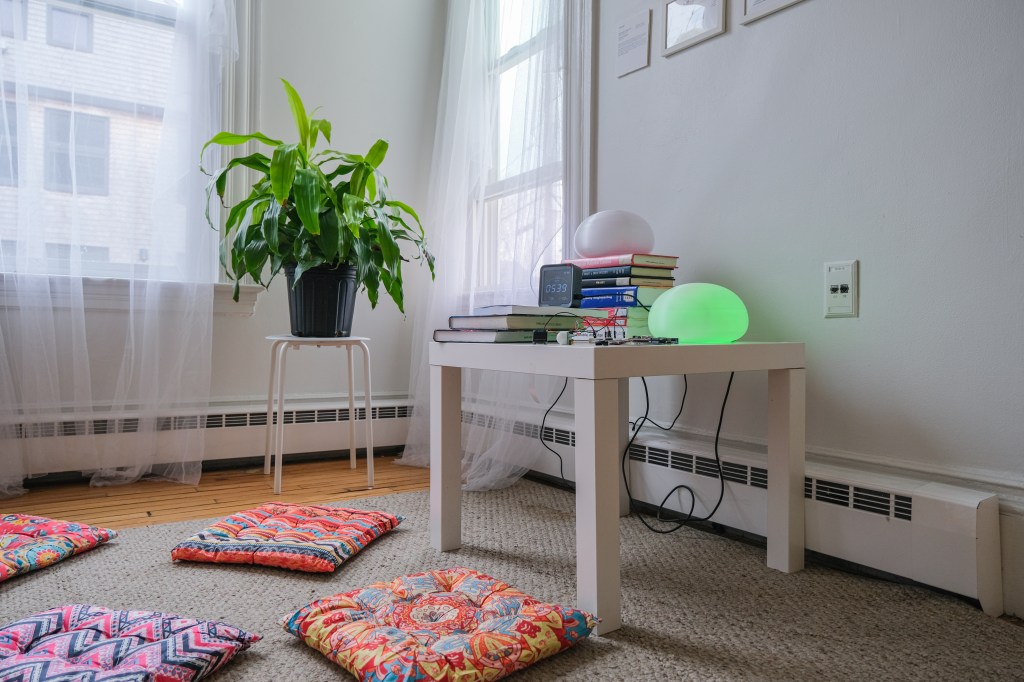
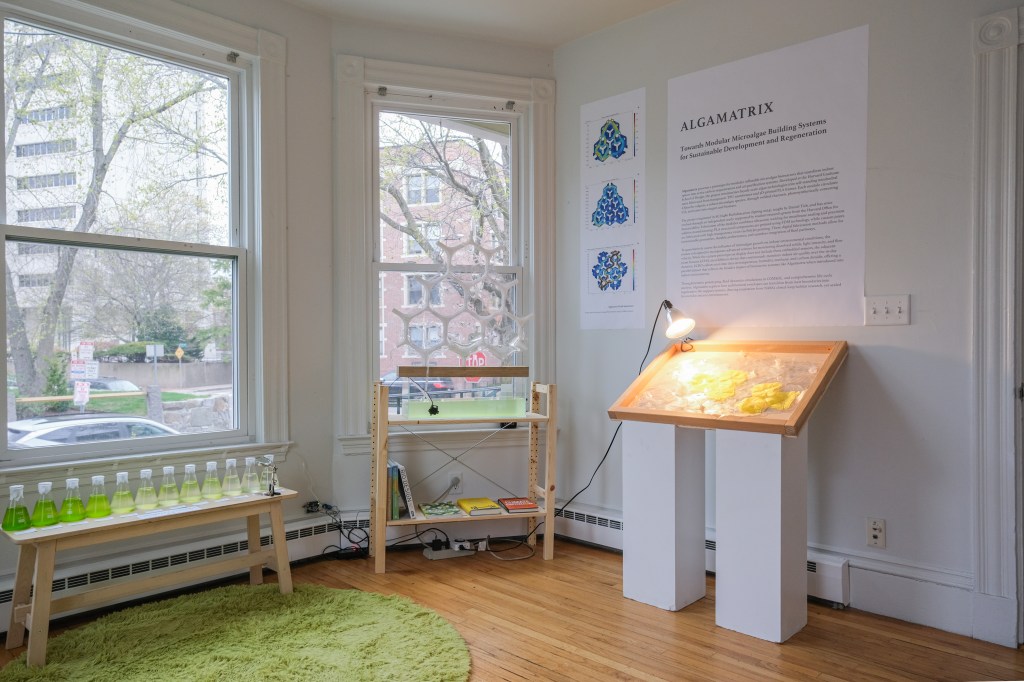
This exhibition presents a collection of experimental domestic prototypes that imagine how architecture, biology, and technology might converge to shape responsive, self-regulating home environments. Included is a living algae installation that functions as a modular bioreactor, photosynthetically purifying indoor air and sequestering carbon. A retrofitted bicycle becomes a weather-responsive kinetic sculpture, spinning in reaction to current thermal comfort data. A predictive lamp monitors air quality in real time and signals when to adjust ventilation for healthier breathing conditions. Meanwhile, a mobile environmental sensor cube collects atmospheric data from anywhere in the world, measuring carbon dioxide, methane, humidity, and temperature, and transmits it back to a home-based installation, where changes in air quality are visualized through mist, light, and organic growth.
Together, these projects suggest a radical shift in how we conceive of domestic life: not as passive interiors, but as ecological interfaces—intelligent, symbiotic, and deeply responsive to both planetary systems and the physiological needs of their inhabitants.
 Lydia Ziqi Yan