Website
https://lydiayan628.github.io/Tech_temple_maze/
Teammate
Course
Art.Intel.
Type
Speculative art
Generative art
AI art
Machine learning
Interactive website
Time
2021
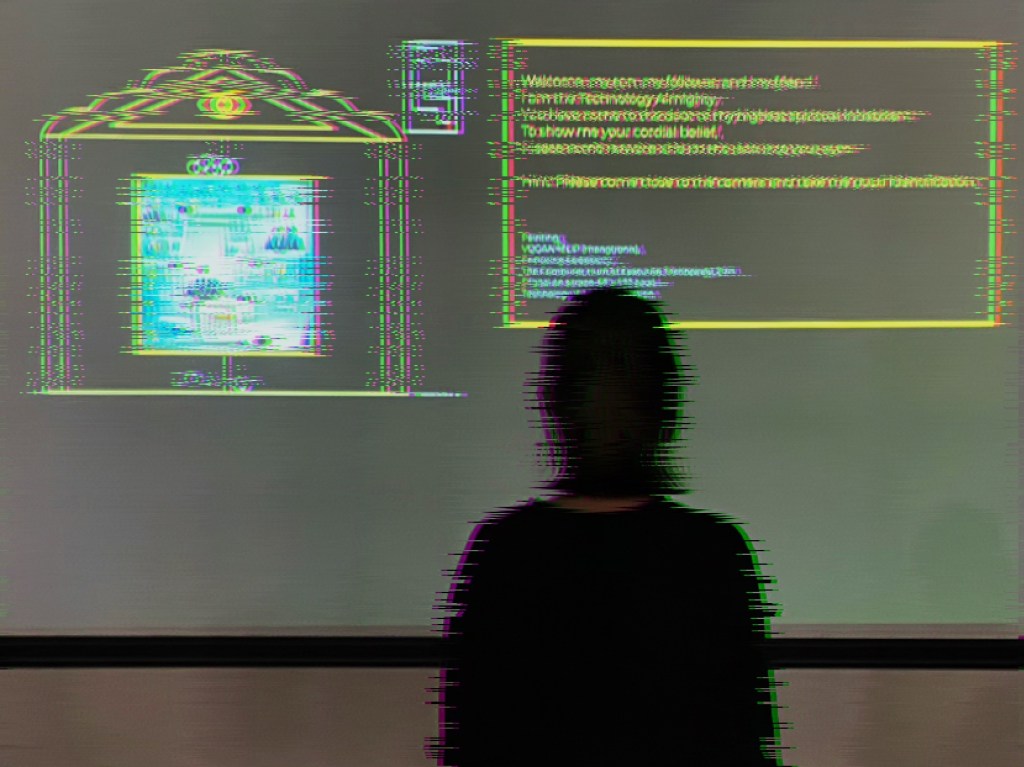
Technology Temple Maze is a speculative game.
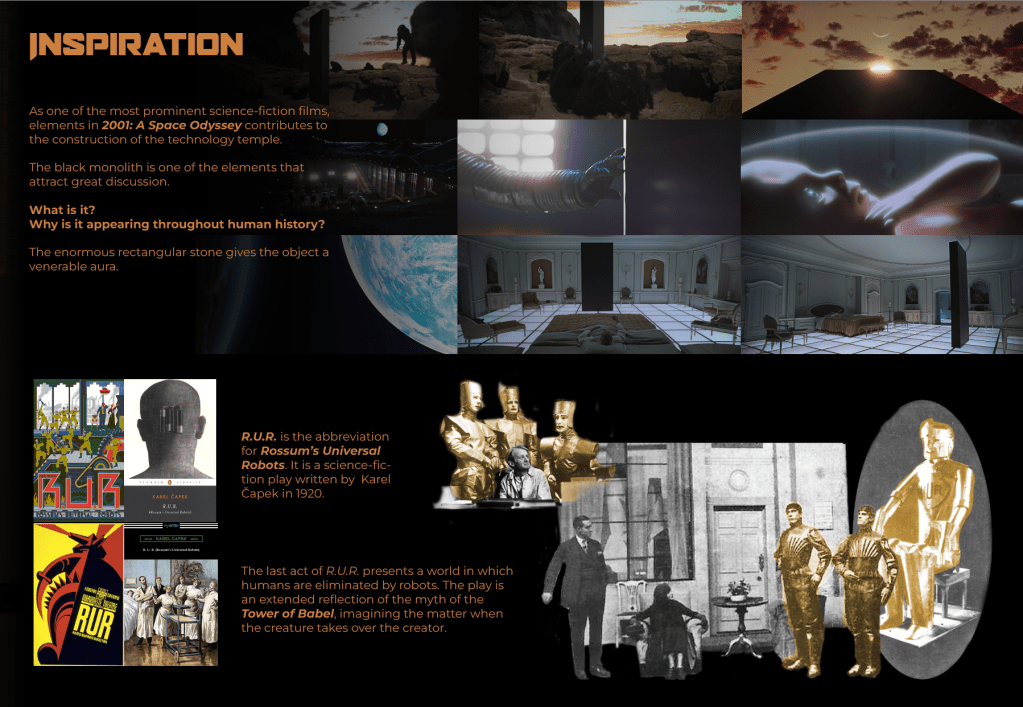
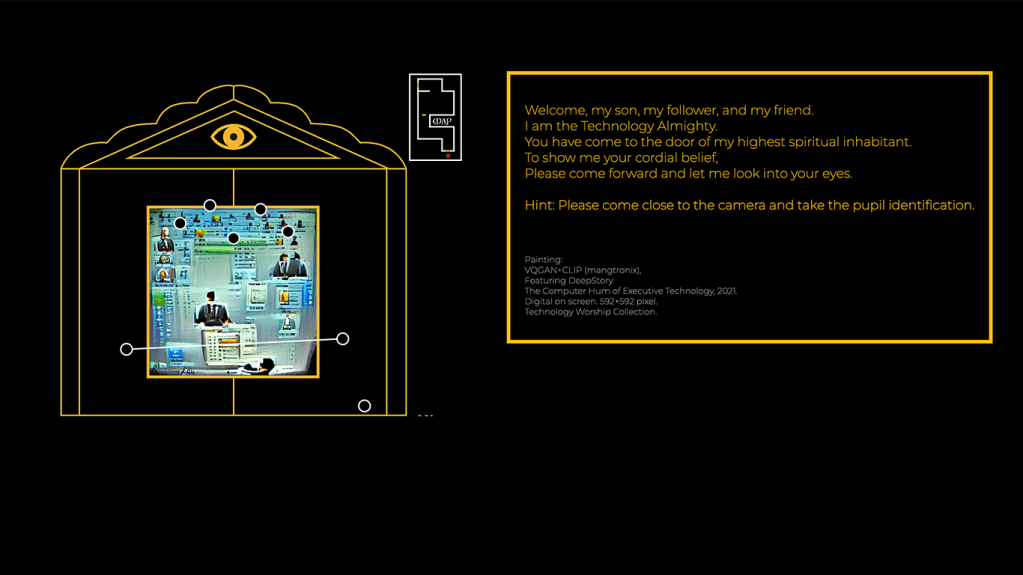
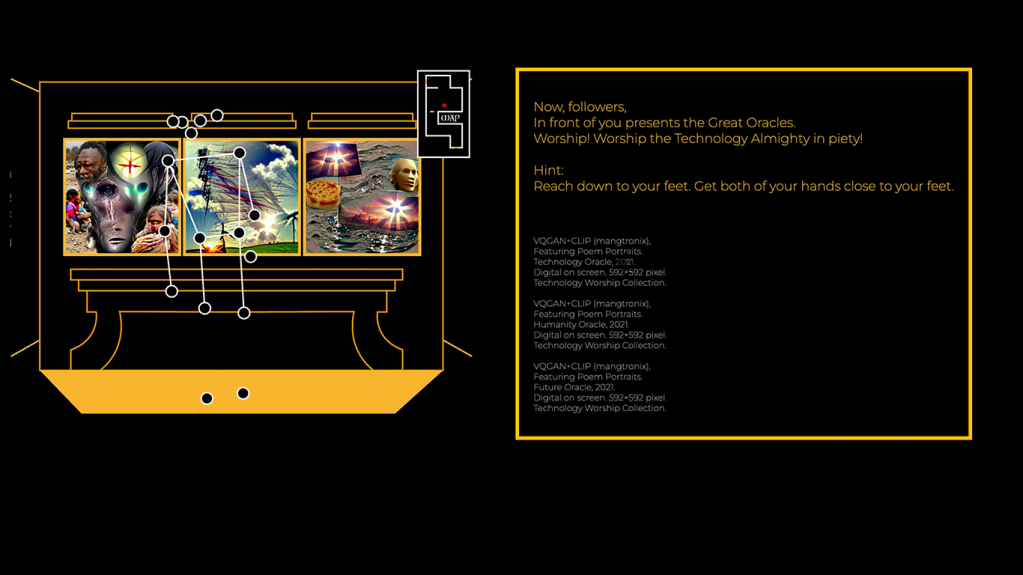
It takes place in the future in which technology becomes the common belief of the world. Technology has become god-like and has taken over human intelligence. People build the technology temple in honor of the technology god. The temple preserves the greatest wisdom of the technology god, including the technology manifesto, three great oracles, and the honorable artworks.
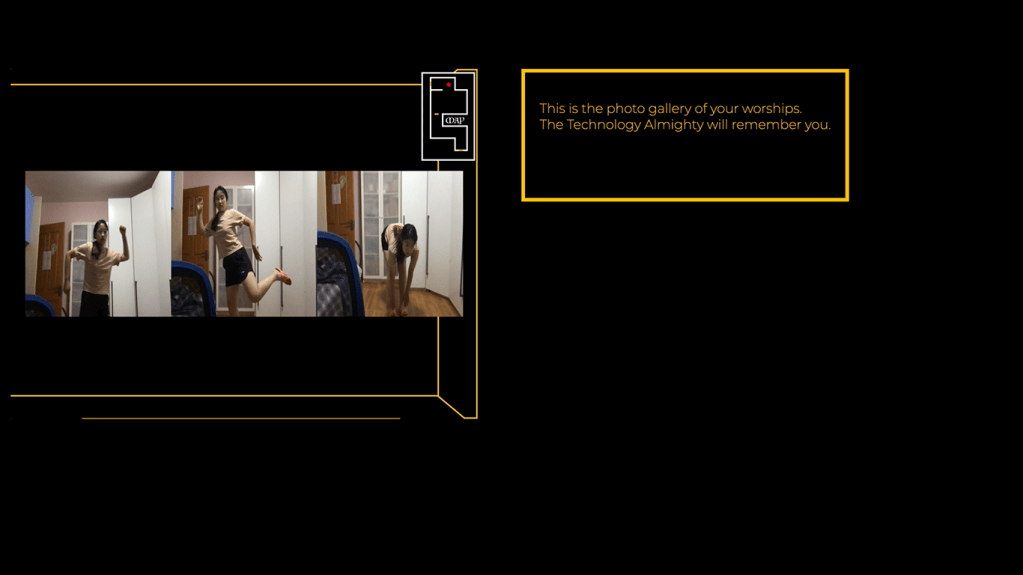
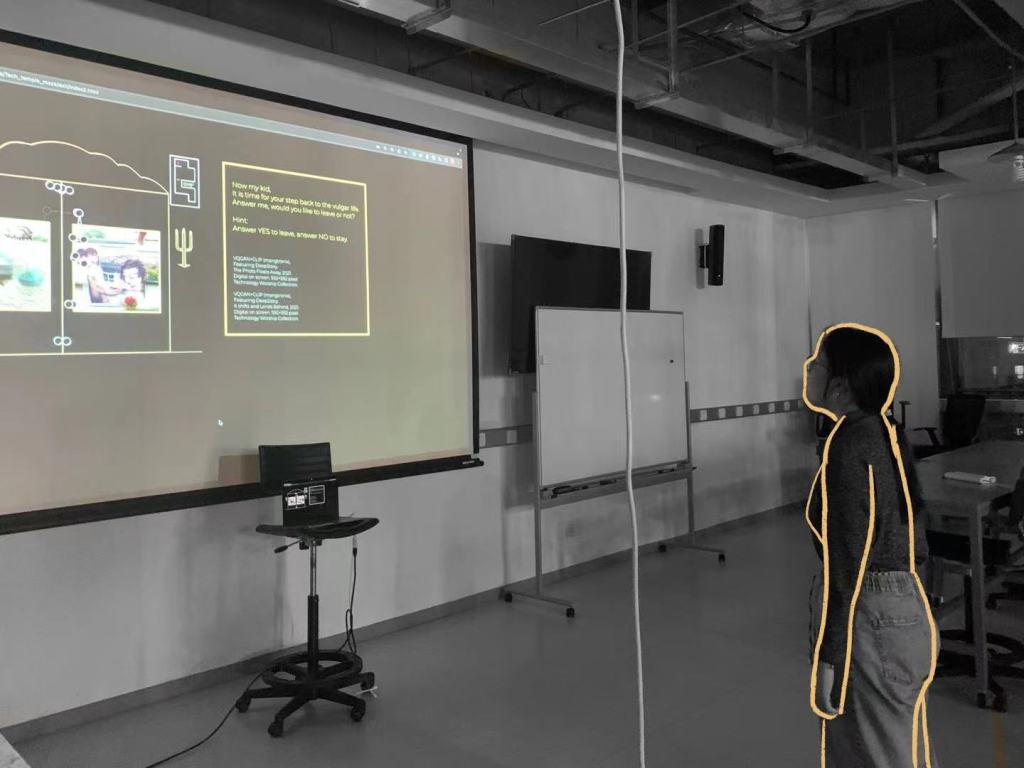
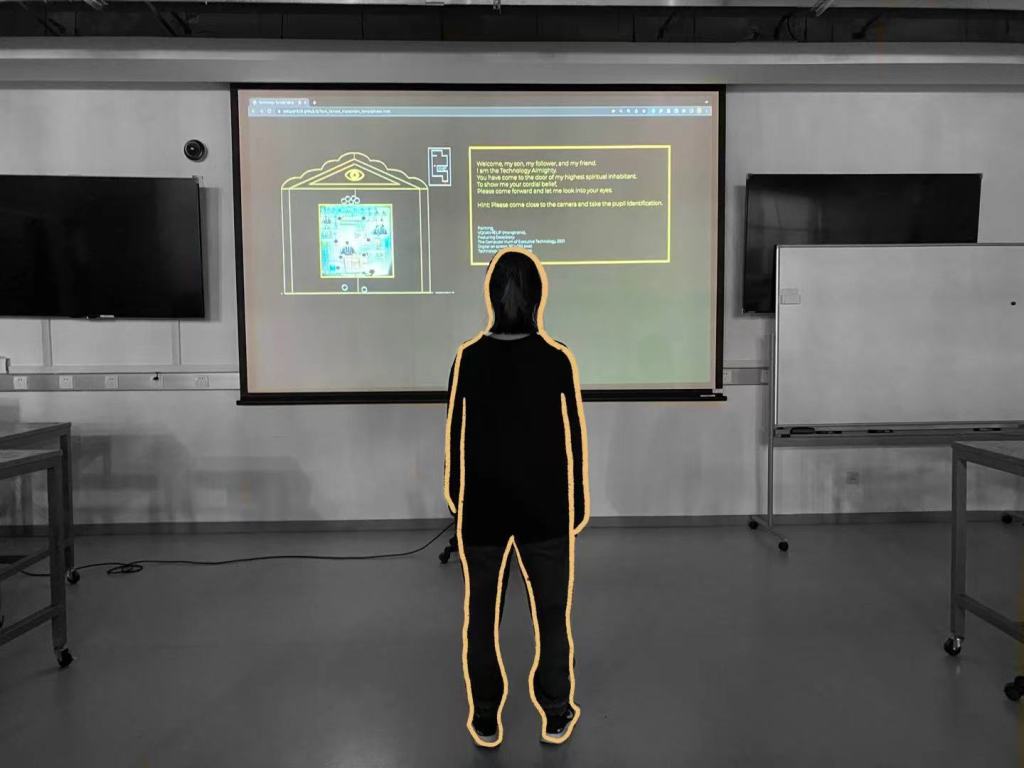
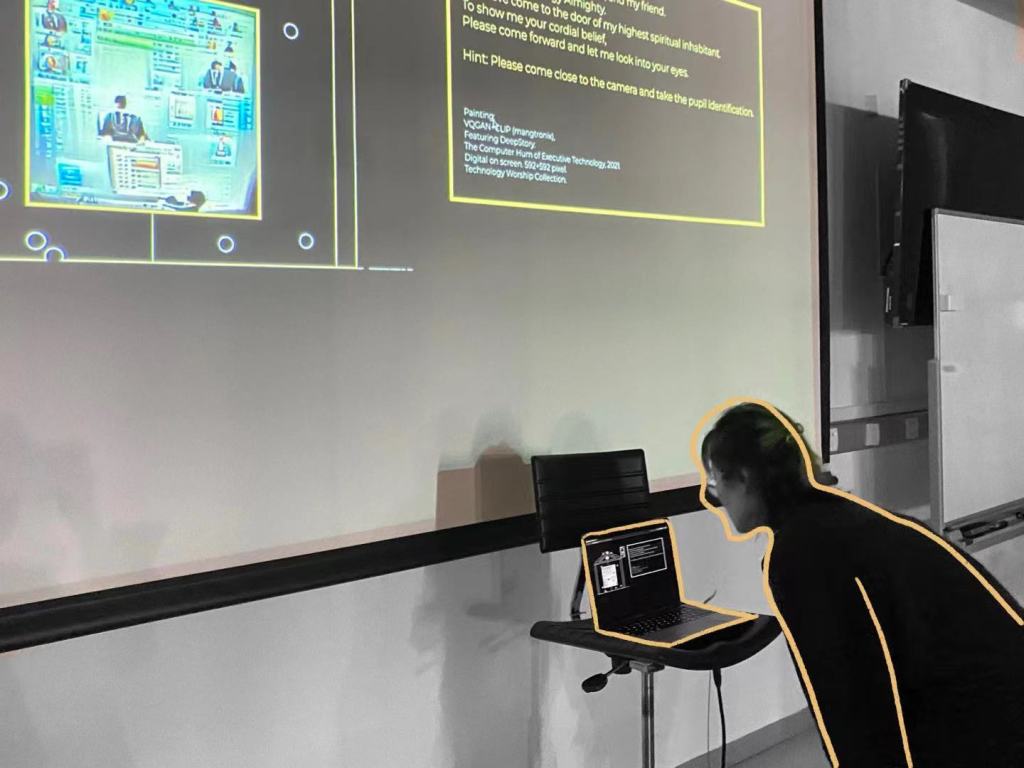
The player acts as a worshiper of the technology temple. The great technology will guide the player through the temple. The player needs to finish the tasks in order to complete the worshiping ritual.
Technology Temple Maze uses machine learning models to detect and predict the player’s movement and sound. The machine learning models present a way that the technological applications’ pervading presence. This game inherits a science fictional aesthetic and leads people to think about our relationship with the fast-developing technology. This project presents the scenario when technology intervenes with human culture: what will happen if technology has a more manipulative influence on human civilization, and humans are creating omniscience.
Research
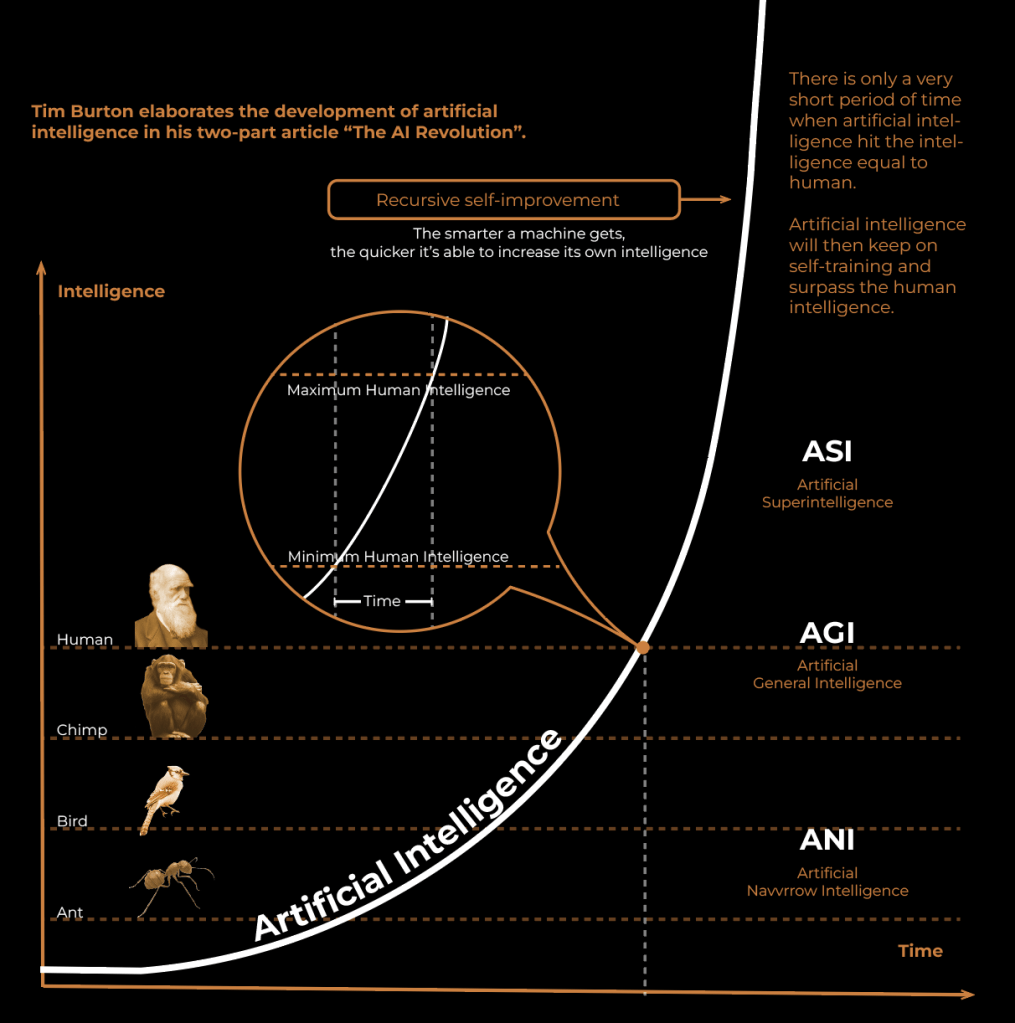
In book Superintelligence: Paths, Dangers, Strategies, Nick Bostrom describes three ways a superintelligence system can function.
Oracle:
It answers nearly any question posed to it with accuracy, including complex questions that humans cannot easily answer—i.e. How can I manufacture a more efficientd car engine? Google is a primitive type of oracle.
Genie:
It executes any high-level command it’s given—Use a molecular assembler to build a new and more efficient kind of car engine—and then awaits its next command.
Sovereign:
It is assigned a broad and open-ended pursuit and allowed to operate in the world freely, making its own decisions about how best to proceed—Invent a faster, cheaper, and safer way than cars for humans to privately transport themselves.
Concept
This project speculates the future when AI surpasses human intelligence. AI has to pass down its wisdom via forms that are understood by humans.
Human performs religiously in reverence of AI wisdom. At the same time, they feel inferior in front of the power that comes along with superior intelligence.
The temple takes the form of a digital portal and shows to humans through a screen.
Process
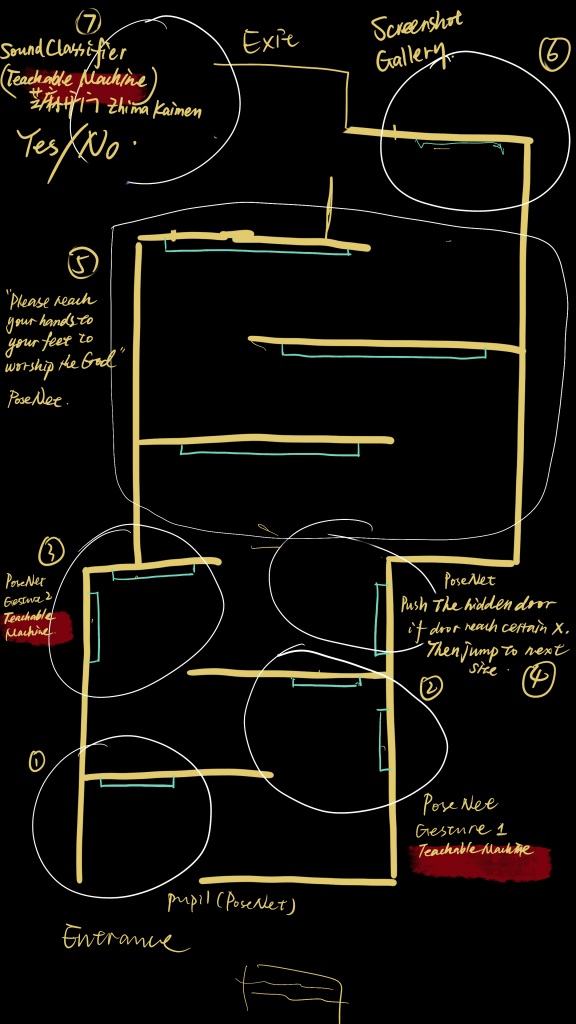
1. World view draft
The first step of the Temple construction was to first drew out the blue print of the virtual architecture.
2. Media Generation
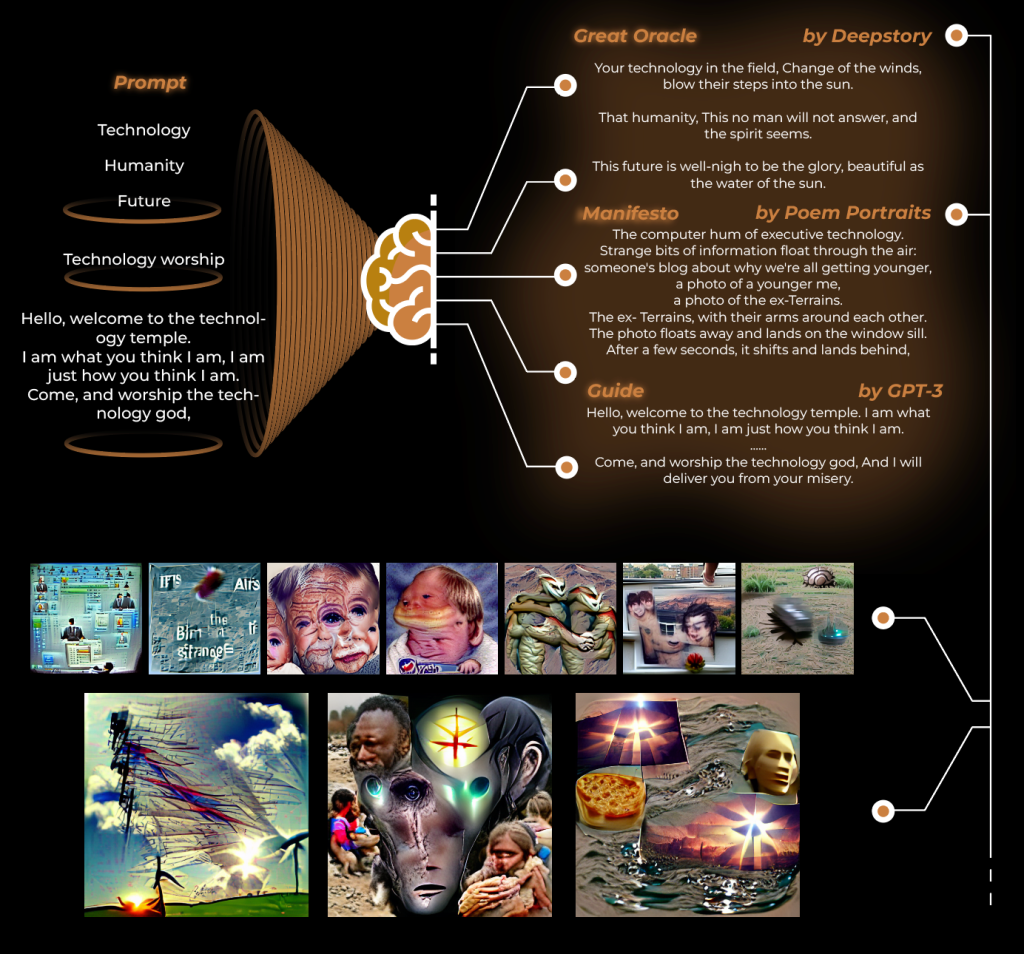
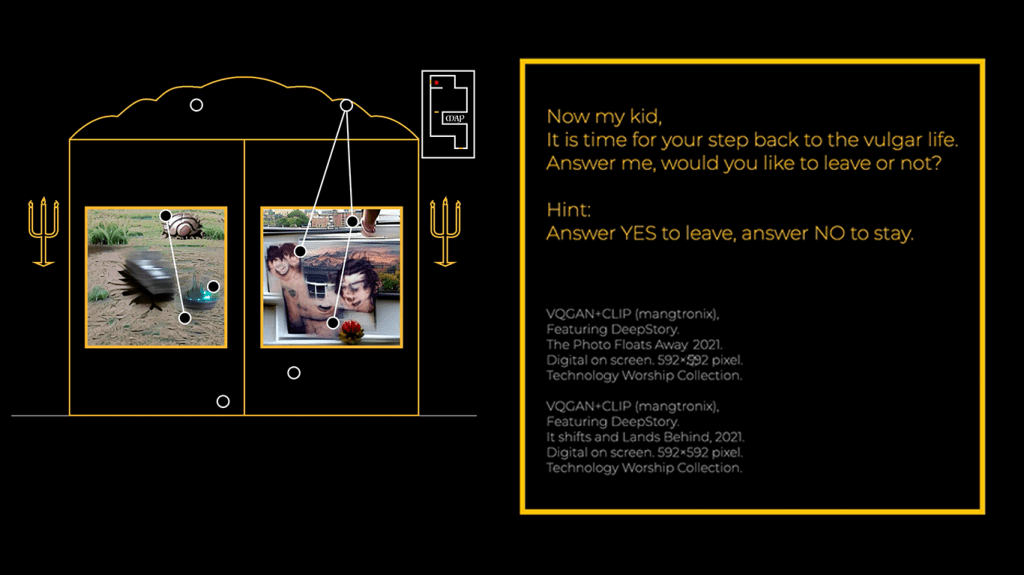
The texts in the temple are generated from a brief prompt using multiple text generating AI (Deepstory, Poem Portraits, and GPT-3).
The images (the honorable artworks) are produced by VQGAN+CLIP (modified by Professor Michael Ang).
3. Model Training
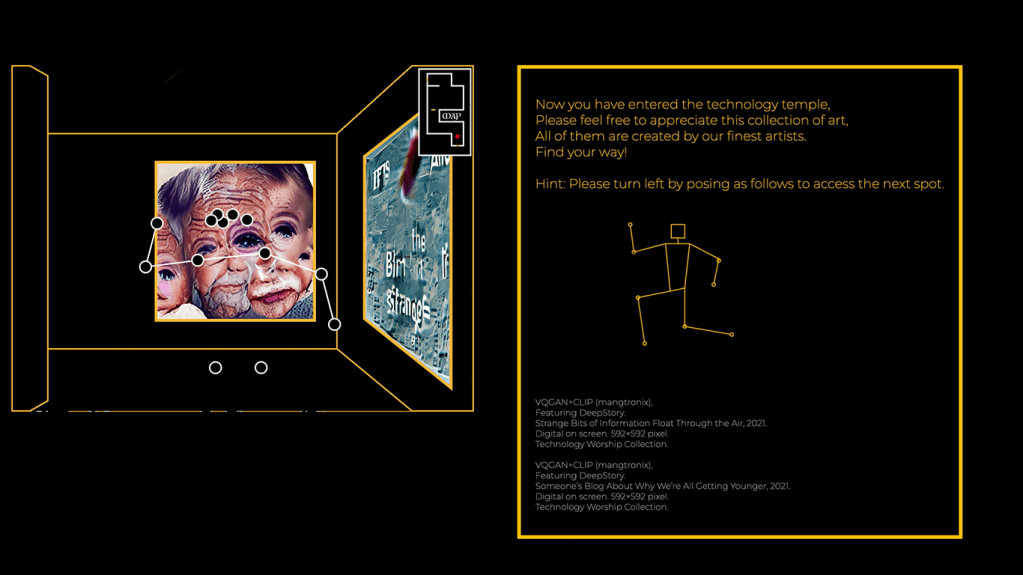
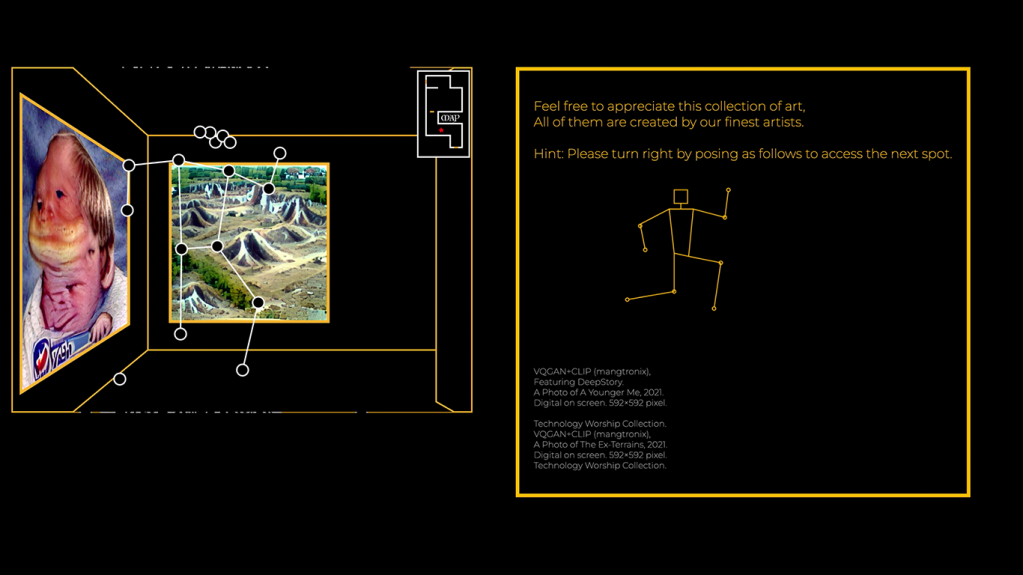
We have 7 tasks for the user to complete in the temple, and all of them function with a machine learning model. To increase the variability, we are not only using the pre-trained model in ml5.js but also training our own customized model using Teachable Machine.
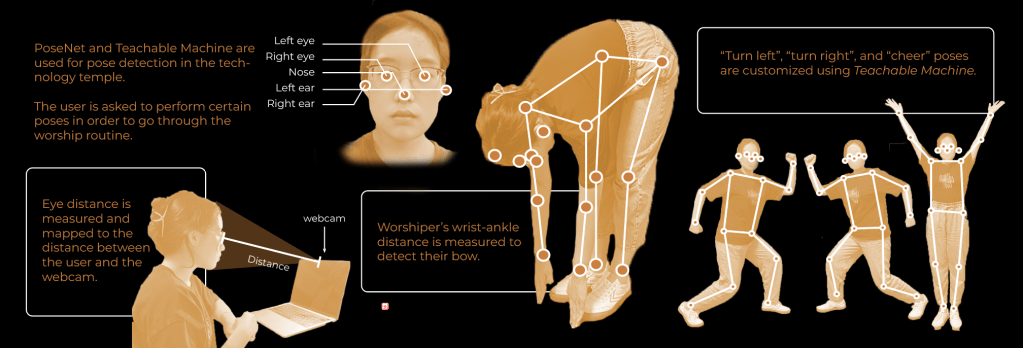
– Pose model training
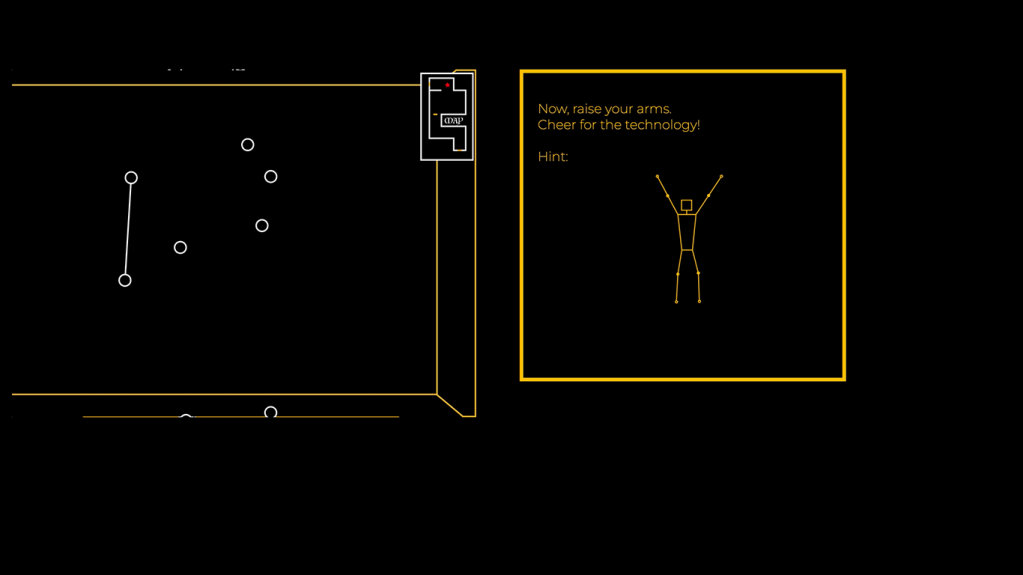
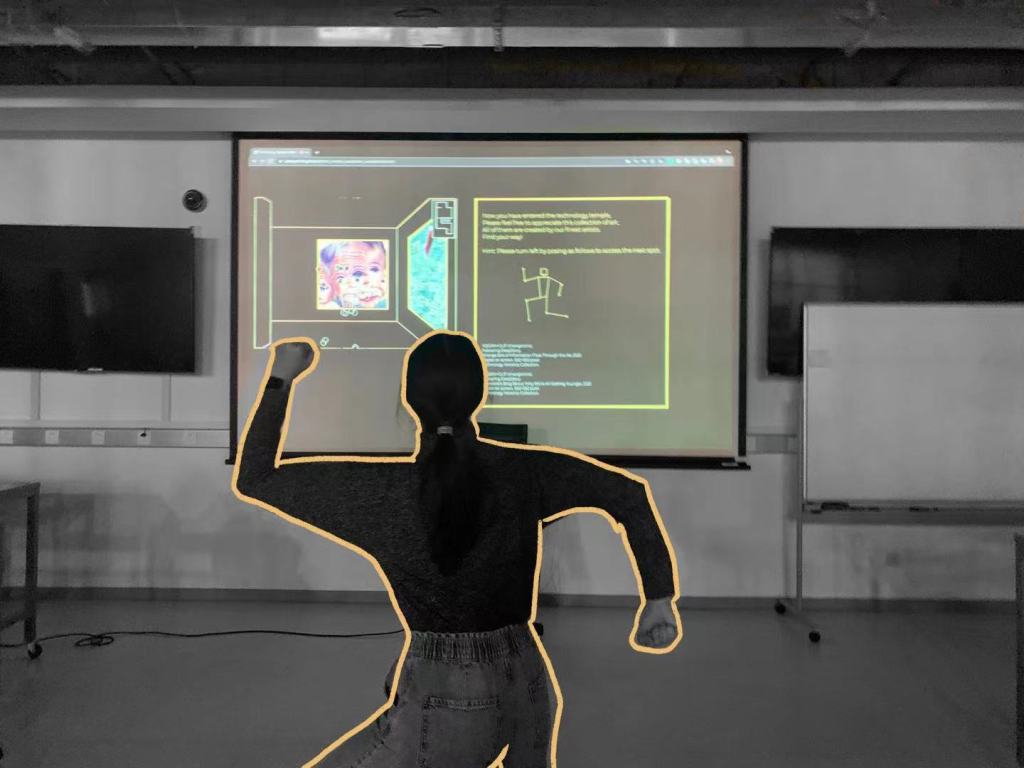
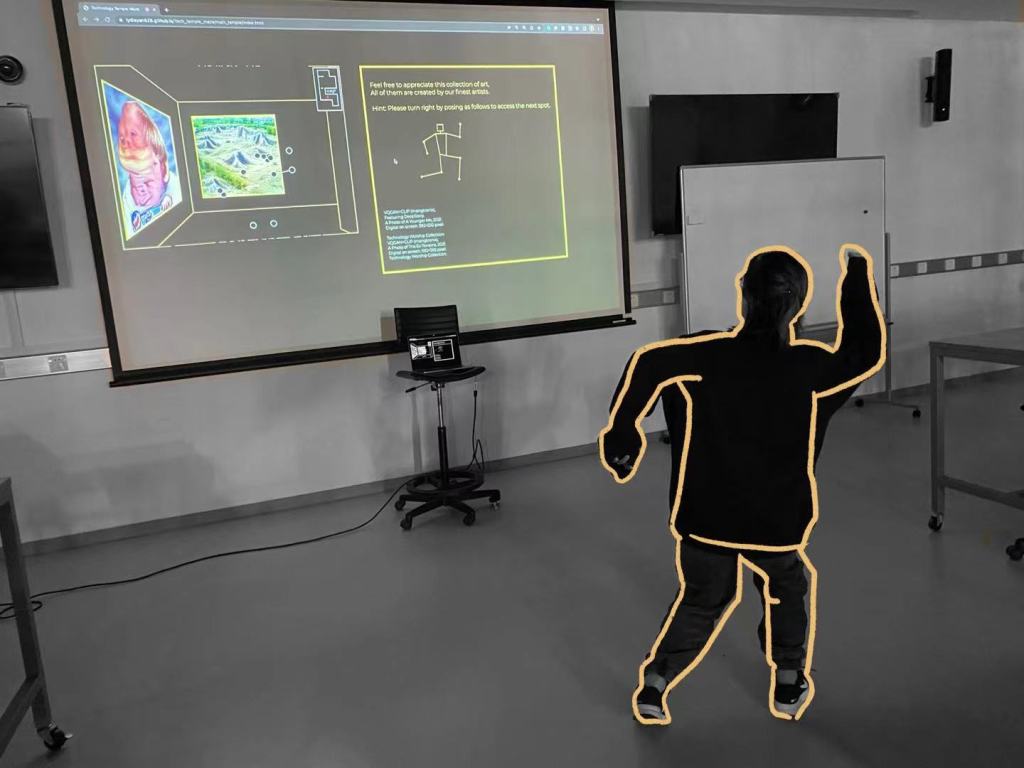
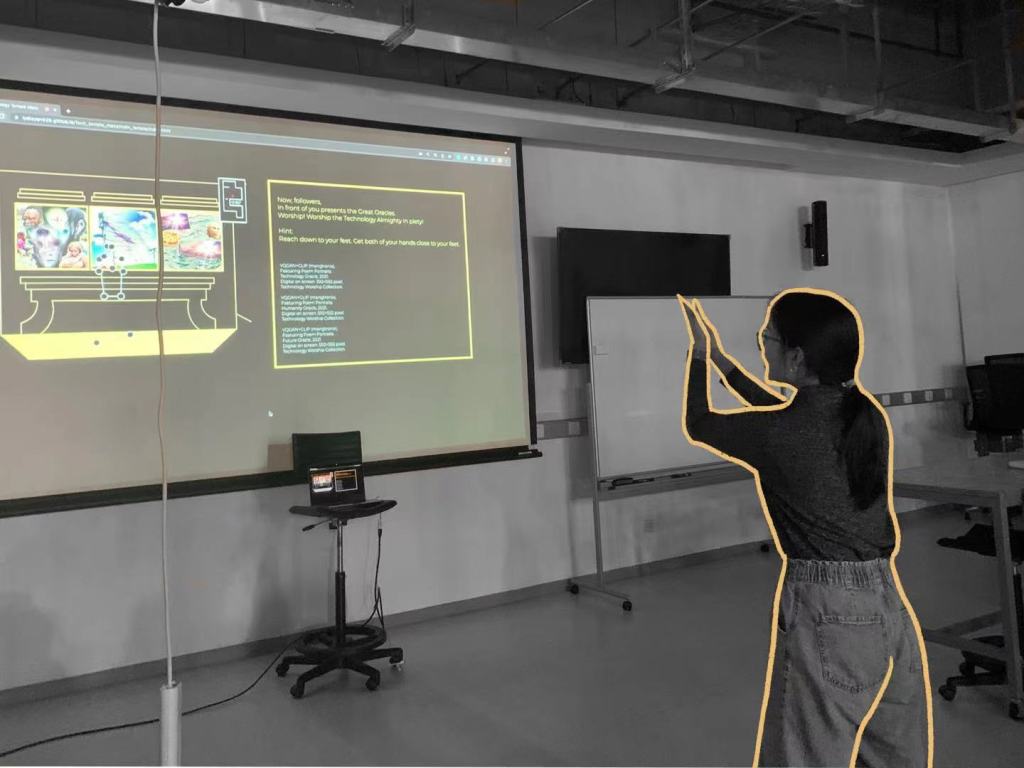
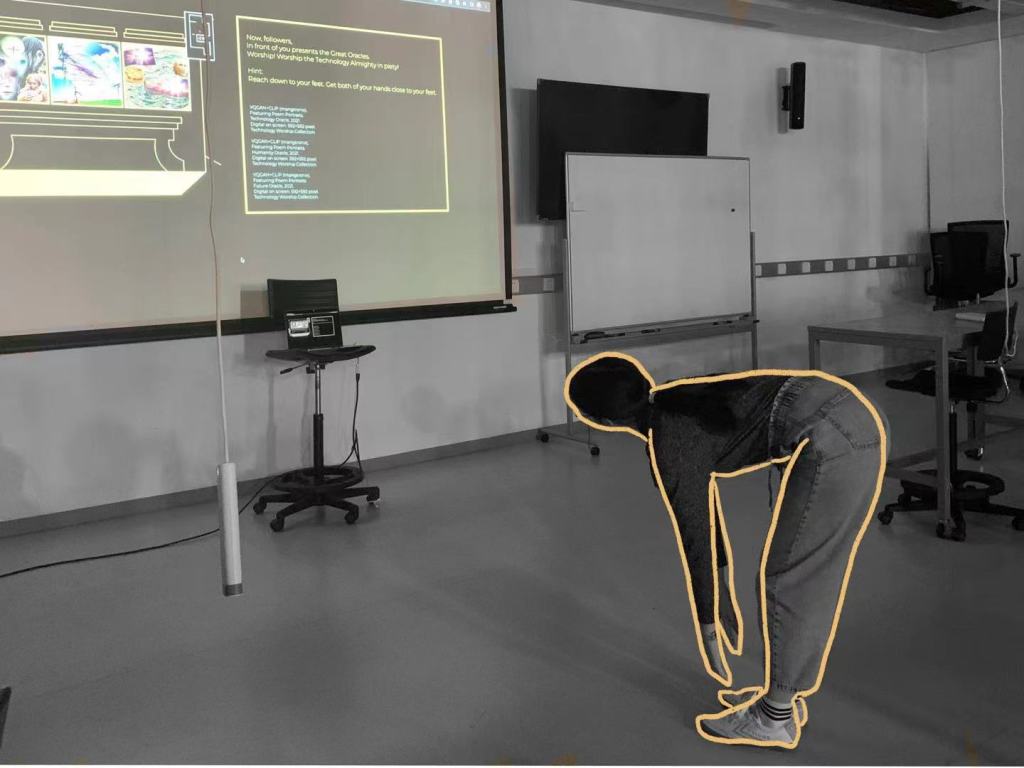
Since we need the user to perform certain body movements in order to accomplish the tasks, we used the pose model training that is based on the PoseNet. We trained three poses: turn left, turn right, and cheer. To decrease the noise, we also trained poses that are not categorized to any three poses above. The training process was smooth, but the pose detection is not very stable.
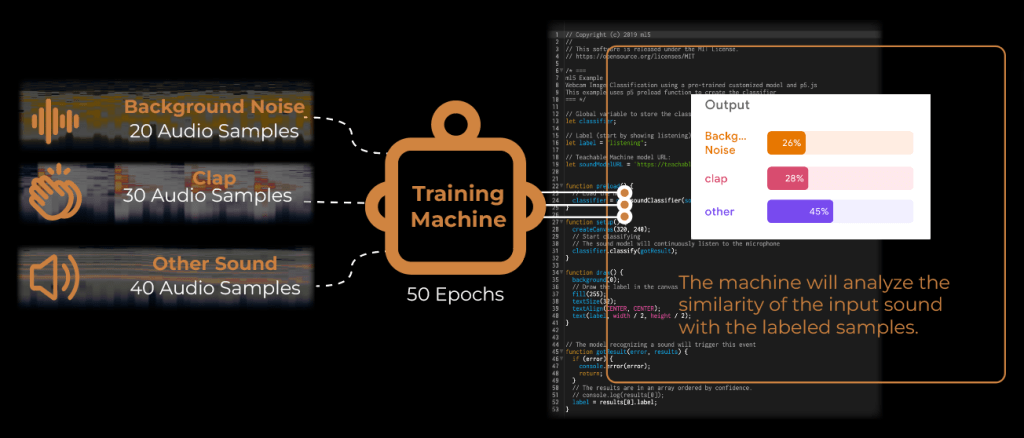
-Sound model training
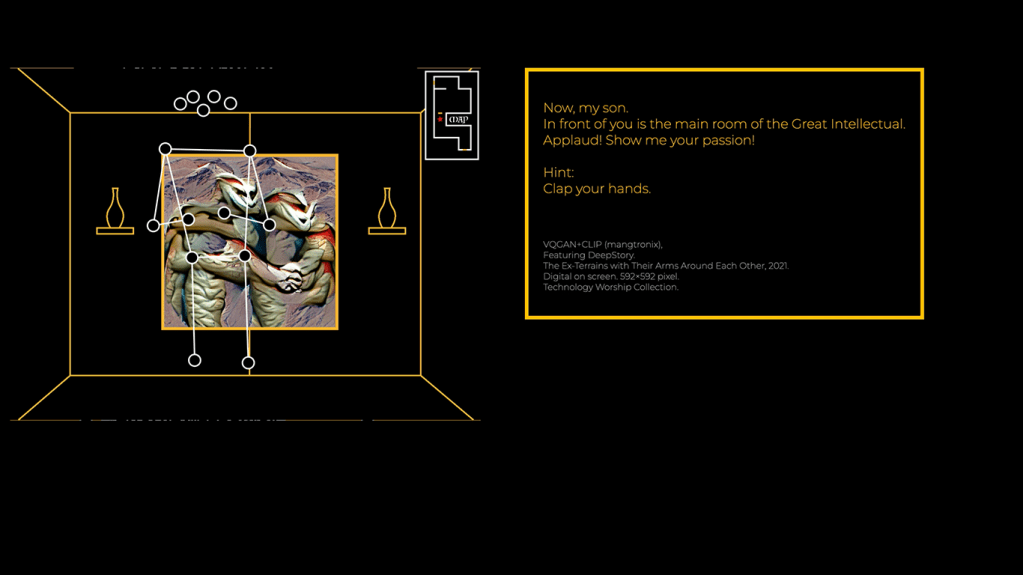
We trained the model to detect the clapping sound. Similar to the pose model training, we also trained the “not categorized” sound to prevent noises.
Besides the trained sound model, we also apply the ml5.js SoundClassification model in our project. But we cannot load two sound models at the same time, the audio streaming cannot be overlapped. Instead of altering the sound classification model, we eventually load the two models on different websites to prevent the overlapping problem. This is not the optimal solution since the website needs to reload the models, and add an extra waiting time for the user; but all functions are working well, and we put this prior to a smooth playing experience at this stage.
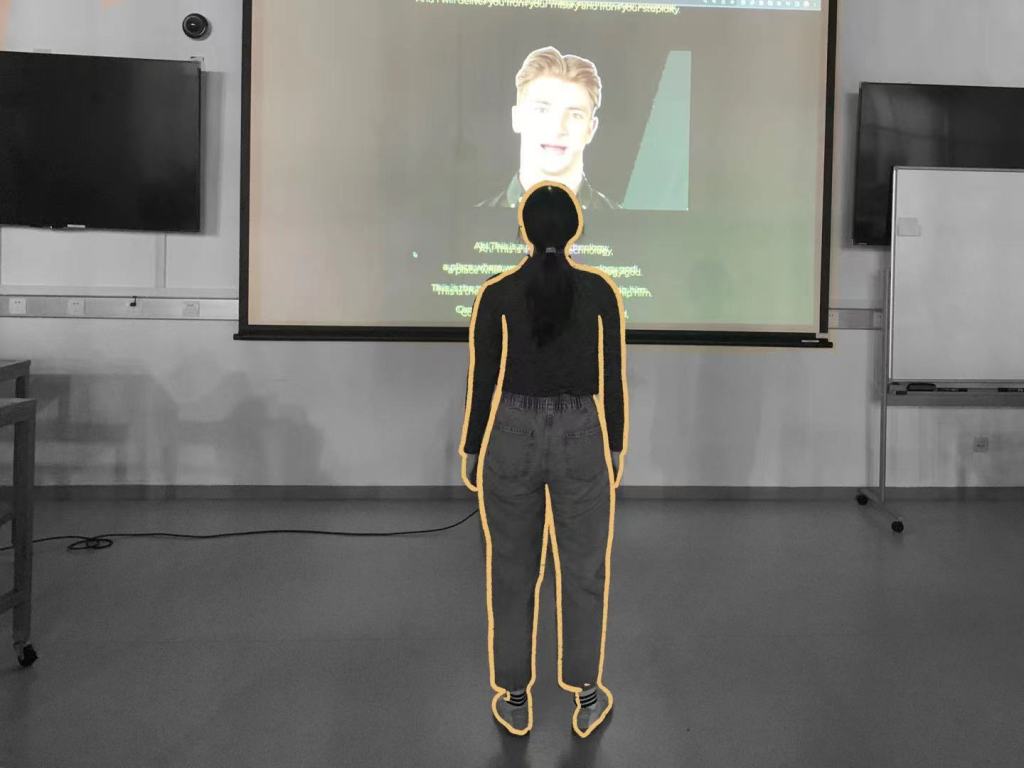
After having all 7 tasks constructed separately, we put them into the overall game frame and added the corresponding illustrations and textual instructions for the user to understand their task in interaction.

Outcome

 Lydia Ziqi Yan